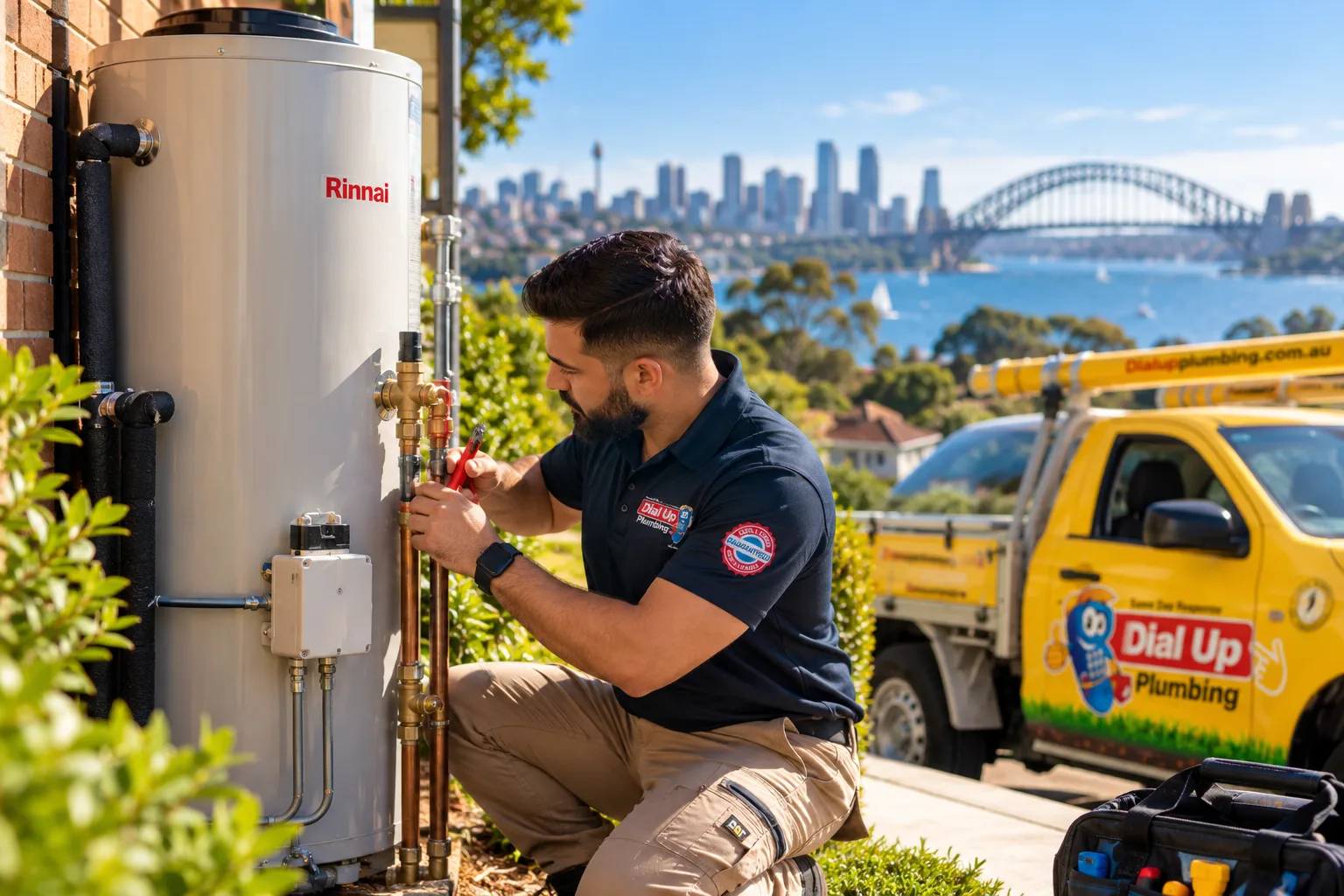
Most hot water systems in Sydney last between 8 and 20 years. An electric or gas storage tank will usually give you 8 to 12 years, a heat pump 10 to 15, and a gas continuous flow unit or a set of solar collectors often reaches 15 to 20.
The type of system matters more than anything else, and after that it comes down to whether the anode and valves were ever serviced. Below is what each type should give you, how to find out how old yours actually is, and how to tell a repair from a replacement.
Average Hot Water System Lifespan by Type
These are the working ranges we see across Sydney homes, not warranty figures.
System type
Typical lifespan
What usually ends it
Electric storage tank
8 to 12 years
Cylinder corrosion once the anode is spent; elements and thermostats are replaceable along the way
Gas storage tank
8 to 12 years
Cylinder corrosion, plus burner and thermocouple wear
Gas continuous flow
15 to 20 years
Heat exchanger, water valve or sensor faults, all repairable for most of its life
Heat pump
10 to 15 years
Compressor or refrigerant circuit; the tank side ages like a storage tank
Solar with boost
Collectors 15 to 20 years, tank 10 to 15
The tank usually goes first; collectors and pumps can be replaced
Stainless steel tank
Often longer than enamel
No anode to maintain, but fittings and valves still wear
Worth knowing on a solar system: the panels and the tank do not die together. We see homes where the collectors are still fine at eighteen years but the cylinder underneath them went years earlier. You are tracking two lifespans, not one.
How to Find Out How Old Your System Is
Almost nobody knows the age of their unit, and it is the most useful number you can have. The system itself will tell you.
There is a compliance plate on the tank body, usually on the side facing out or near the top, and on the front panel of a continuous flow unit. It carries the brand, model, capacity and serial number. Many Australian tanks print the month and year of manufacture directly. Where they do not, the first digits of the serial number usually encode the year and week it was built.
Photograph that plate. It gives the age, the capacity and the model, which is what we need to quote a like-for-like replacement, often before anyone comes out to the property.
If the plate has faded past reading, which happens on units that have sat in the western sun for a decade, check the back of your switchboard or meter box. A dated compliance certificate sticker is often left there from the original install.
What Actually Shortens a Hot Water System’s Life
A tank does not fail because of its age. It fails because of what happened, or did not happen, to a handful of parts. Before those, one myth worth clearing up.
There is plenty of advice online blaming hard water for killing Sydney hot water systems. Sydney’s drinking water is soft to moderately soft across most of the network, which you can check for your own area through Sydney Water. Scale is a genuine problem in parts of Australia. It is not the main thing ending hot water systems here, and blaming the water usually means the real cause is being missed.
The sacrificial anode
A magnesium or aluminium rod inside the tank that corrodes so the steel does not. It is a consumable part. Once it is spent the cylinder starts rusting from the inside, and there is no repair for that. Having it checked around the five year mark and replaced when it is gone is the single service that adds years to a storage tank. Most tanks never get it, and that is why most tanks die at ten rather than fifteen.
The temperature and pressure relief valve
The valve on the side of the tank that lets water out as the contents heat and expand. Manufacturers call for it to be operated regularly and replaced at intervals. A valve that drips constantly, or one that never discharges at all, is telling you something. It is a small part and a quick replacement.
The tempering valve
This mixes the stored water down to a safe temperature at your bathroom taps. It wears out on its own schedule, and a worn one gives lukewarm showers that get blamed on the tank. We have replaced plenty of these on systems the owner had already written off.
Mains pressure
High mains pressure with no pressure limiting valve wears out every valve and fitting on the system, not just the cylinder. It is a cheap thing to fit and an expensive thing to ignore.
Where the unit sits
Salt air counts. External casings in Bondi, Coogee, Cronulla and along the Northern Beaches corrode faster than the same unit in Earlwood or Ryde. It attacks the casing, fittings and fixings rather than the tank interior, but it shortens the working life of the whole unit.
Shelter counts too. Older semis and terraces through the Inner West often have the unit outside in a narrow side passage with no cover at all, and twelve years of direct weather tells on the casing, the insulation and the electrics. An indoor tank needs a safe tray plumbed to a drain, so that when the cylinder does eventually fail the water goes somewhere sensible rather than through your floor.
Household size
A system too small for the number of people using it runs flat out every day. More heating cycles, more work for every component, a shorter life. If the house has gained people since the unit went in, it is working harder than it was ever specified to.
The original installation
Wrong pressure settings, no tempering valve, a bad relief line, or a unit sitting on soil instead of a proper base. These shorten the life of a brand new system and can void the manufacturer warranty before you ever get to use it.
Replace or Repair: Reading the Symptoms
Some symptoms mean the cylinder has failed. Others mean a part has, and the system still has years left. Telling them apart is the whole decision.
What you are seeing
What it usually means
Replace or repair
Water from the tank body, at the base or down a seam
The cylinder has corroded through
Replace
Rusty or brown hot water that does not clear
Corrosion inside the tank, or a spent anode
Usually replace
Water from the relief valve pipe or a fitting
A valve or fitting has failed
Repair
No hot water, or hot then cold
Element, thermostat, thermocouple, gas valve or tempering valve
Repair, unless the tank is also past twelve years
Rumbling or popping while heating
Sediment sitting in the base of the tank
Repair by flushing if the tank is young
Runs out sooner than it used to
Sediment reducing capacity, or a failed element
Repair if the tank is sound
The short version: a leaking cylinder is finished and cannot be repaired by anyone. Almost everything else is a part, and parts are replaceable.
Repair is usually the better option when the system is under about eight years old, the fault is a single component such as an element, thermostat, thermocouple or valve, the tank itself is sound with no rust or weeping at the base, and parts are still available for the model. On a gas continuous flow unit, repair stays worthwhile much later into its life, because the failures are parts rather than structure.
Replacement is the better option once the cylinder is leaking from the tank body, when the unit is past 10 to 12 years and facing a significant repair, when you are looking at a second major repair inside a year, or when parts are no longer made for that model. At that point you are paying twice for the same system. If you are weighing it up, our hot water systems in Sydney page covers what we repair, replace and install, and we will tell you honestly which one your unit needs.
One thing worth taking seriously. A storage tank that lets go empties its full contents wherever it sits, and in a laundry or internal cupboard that is a flooded floor. Shut off the isolation valve at the unit and call us. It is the same response as any burst pipe emergency, and we are available for it 24/7.
How to Get More Years Out of the System You Have
Two things do most of the work, and only one of them is a homeowner job.
Most manufacturers ask for the temperature and pressure relief valve to be operated about every six months, and the instructions on the unit itself always take precedence over anything you read online. If you do it yourself, the water leaving the discharge pipe is scalding, so stand well clear of the outlet, keep children and pets away, and raise the lever gently for a second or two before releasing it.
You should get a short burst of water and then a clean stop. If nothing comes out, if it keeps running after you release the lever, or if the valve is corroded or has not been operated in years, stop there and call a licensed plumber. A valve that fails to reseat can empty the tank, and on an older unit, operating a seized valve can create a problem rather than find one. If you are at all unsure, leave it with us and we will check it as part of a service.
Everything else belongs to a licensed plumber. Having the anode checked and replaced every three to five years and the tank flushed is the difference between a storage system reaching eight years and reaching fifteen. Our hot water system services cover servicing, repairs and replacements across Sydney, and every job is backed by our 100% lifetime labour guarantee on our workmanship.
On a heat pump, keeping the air intake and surrounds clear matters as well. A unit that cannot breathe works harder than it should.
Frequently Asked Questions
There is no such thing as a silly question when it comes to hot water. If yours is not here, dial up and we will talk it through.
How old is too old for a hot water system?
For a storage tank, anything past twelve years should be on your radar even if it is still working. For a heat pump that line sits closer to fifteen, and for gas continuous flow or solar collectors closer to twenty. Age alone is not a reason to replace a system running well, but it is a good reason to stop spending money on repairs and start planning.
Does the warranty tell me how long it will last?
It is a reasonable clue. Manufacturers commonly warrant a cylinder somewhere between five and twelve years depending on brand, model, and whether the tank is installed indoors or out. They set that figure knowing their own failure rates. Note that most cylinder warranties require the anode and valves to have been serviced.
Can a hot water system be repaired instead of replaced?
Often, yes. Elements, thermostats, tempering valves, relief valves, gas valves and sensors are all repairable. What cannot be repaired is a corroded cylinder. If the tank wall has gone, the only option is a new unit, and anyone telling you otherwise is not doing you a favour.
Who is responsible for the hot water system in a strata unit?
It depends on whether the system serves your lot alone or the whole building. An individual unit inside your apartment is generally the owner’s responsibility, while a shared central plant is usually common property and sits with the owners corporation. Check your strata plan before booking anything, and we can speak to your strata manager directly if that helps.
Will home insurance cover a failed hot water system?
Policies differ, but most home insurance covers water damage caused by a sudden failure rather than the cost of the appliance itself. A tank that bursts and damages your flooring is a different claim from a tank that simply wore out. Read your product disclosure statement, and photograph the damage before anything is cleaned up or removed.
How long does it take to replace a hot water system?
A straight swap of the same type in the same location is usually done within a few hours, and you will have hot water again the same day. It takes longer if the system is being relocated, if the type is changing, or if electrical or gas work is needed to suit the new unit. We will tell you which one you are looking at before we start.
Should I replace a working system before it fails?
If it is still heating properly there is no need to rush. What we would suggest is this: once a storage tank passes ten years, decide now what you would replace it with, so that when it does go you are making a considered choice rather than a panicked one at nine o’clock at night.
The One Thing to Do This Week
Go and find the compliance plate on your unit and photograph it. Two minutes, and it turns every future conversation about that system from guesswork into something specific.
If the age worries you, or something on the symptoms table sounds familiar, dial up on 02 8999 6125 or request a free quote and we will give you a straight answer on whether it needs replacing or just a service.
Share With:
Related Blog Posts
Blogs
November 3, 2026
Are Blocked Drains Covered by Home Insurance in NSW?
Home insurance in NSW usually pays for the water damage a blocked drain causes, and usually does not pay to clear the drain or repair the pipe behind ...
Most hot water systems in Sydney last between 8 and 20 years. An electric or gas storage tank will usually give you 8 to 12 years, a heat pump 10 to 1...
The average hourly rate for plumbers in Sydney typically ranges from $100 to $200, depending on the complexity of the job, the time of day, and the pl...
We are a family owned business which has been operating throughout Sydney for over 25+ years
ABN: 84133103349
LICENCE #: 218599c
Finn
Outstanding plumbing service! Chris was incredibly professional, punctual, and thorough. He quickly found the cause of our drainage issue using a camera inspection and explained everything clearly. The job was done neatly, efficiently, and with great attention to detail. Highly recommend Chris for anyone needing a reliable and skilled plumber.
Greg Whalan
Dial up plumbing were honest and upfront with the costs associated with the job. In addition, they also too made a video of the problem areas with ongoing comments while the job was being performed. I’d recommend these guys to anyone who have plumbing issues
Bianca
My family are very satisfied and impressed with this plumbing company. We live in the Liverpool area. Charlie visited us for a quote on a kitchen tap replacement and toilet repairs. He was very friendly and professional, took the time to explain the repairs and discuss prices. Chris then carried out the repairs the same day and he was equally as friendly and professional. We were so impressed with the work. We also had an emergency hot water system repair after hours the next week. We contacted Charlie who was so very helpful over the phone. Losing hot water can be stressful but he put us at ease. He attended within 30 mins and again explained the issue and cost. Once we agreed on the price he completed the repairs right away and we had hot water again. I have to say again how helpful Charlie was to us because losing hot water can be stressful especially the time of night everyone needs to shower. We are so grateful to finally find a plumbing company that is professional, honest, friendly and genuine on both occasions.
Fast response. Friendly service. No stress.
Claim your $50 before the end of November — spots are limited. Reach out now our friendly team will respond within 60 seconds.