


Electric hot water repairs, replacements & installation




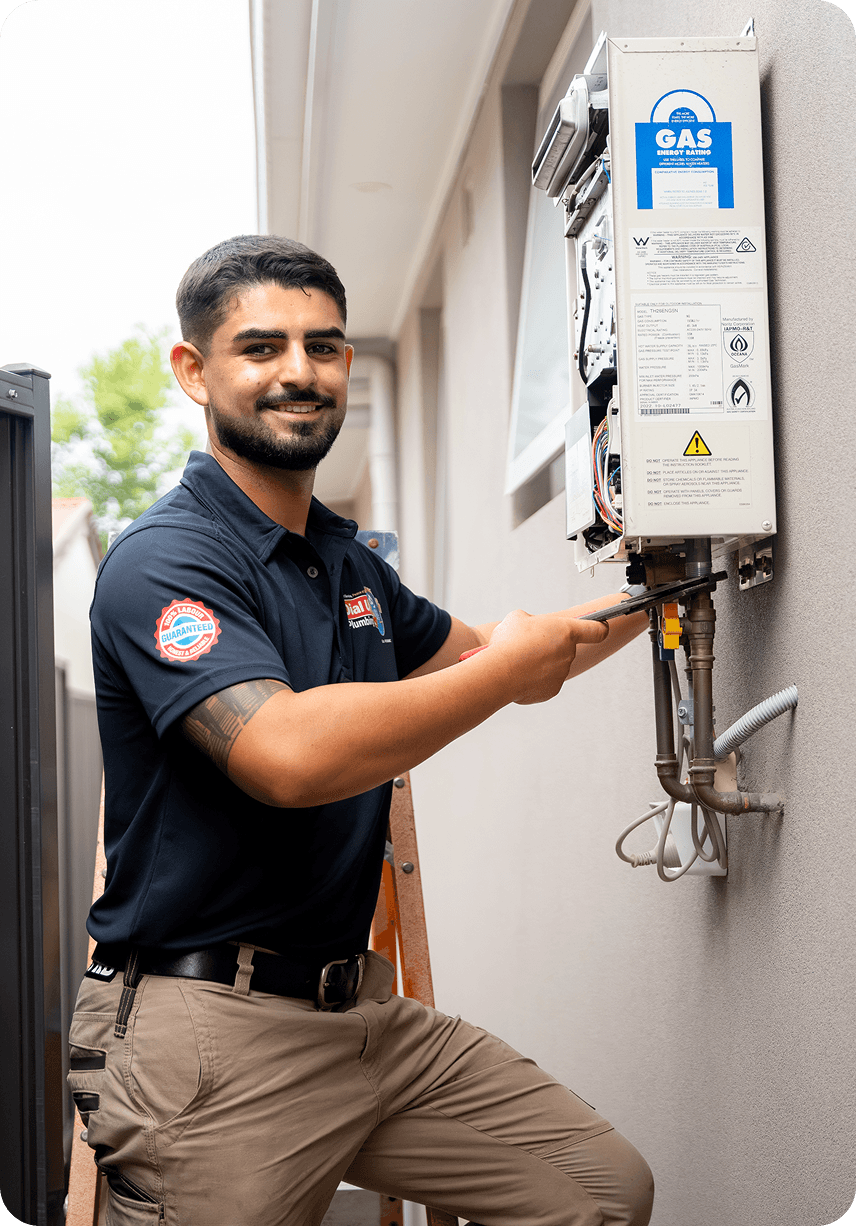
Fast, honest electric hot water repairs, replacements and installations across Sydney, 24/7.
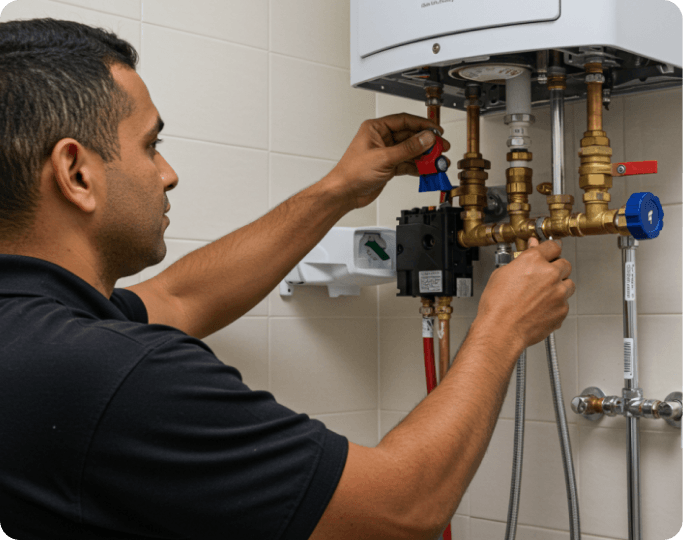
Whether it’s a cold shower on a winter morning, a breaker that trips every time the tank heats, or water pooling under the unit, at Dial Up Plumbing we diagnose, repair and replace electric hot water systems every day of the week. Most faults turn out to be a repair rather than a replacement: a heating element, a thermostat, a relief valve or a tempering valve. We carry the common parts on the van, so one visit usually does it.
The exception is a leaking cylinder. Once the steel tank has corroded through, no repair will hold it, and we’ll tell you that straight rather than sell you a fix that buys a fortnight. Dial Up Plumbing have been looking after Sydney homes for more than 25 years, and we’re on call 24 hours a day, 365 days a year, because hot water never fails at a convenient hour. You get a licensed plumber at the door, an upfront price before any work starts, work completed to Australian Standards (AS3500), and a lifetime workmanship guarantee on every job.
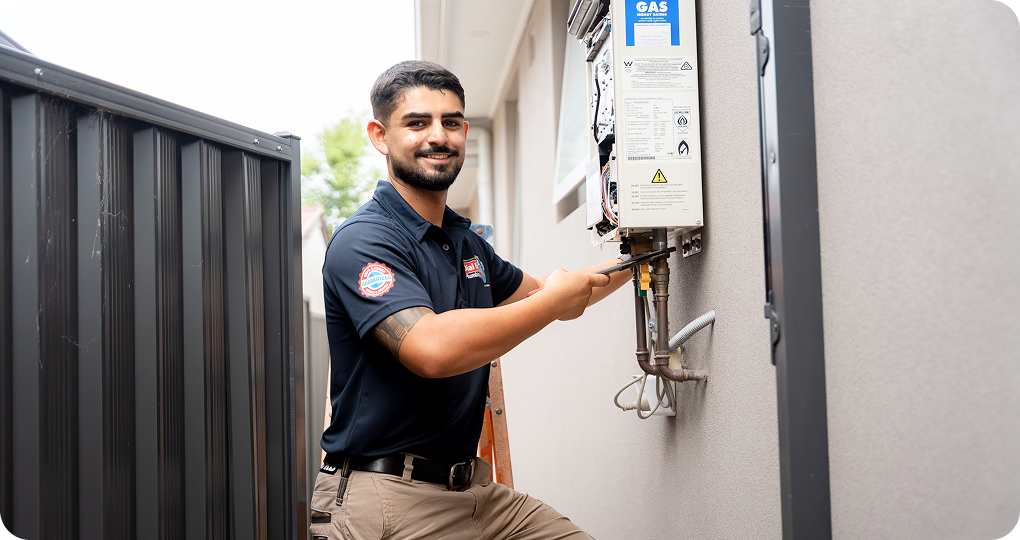
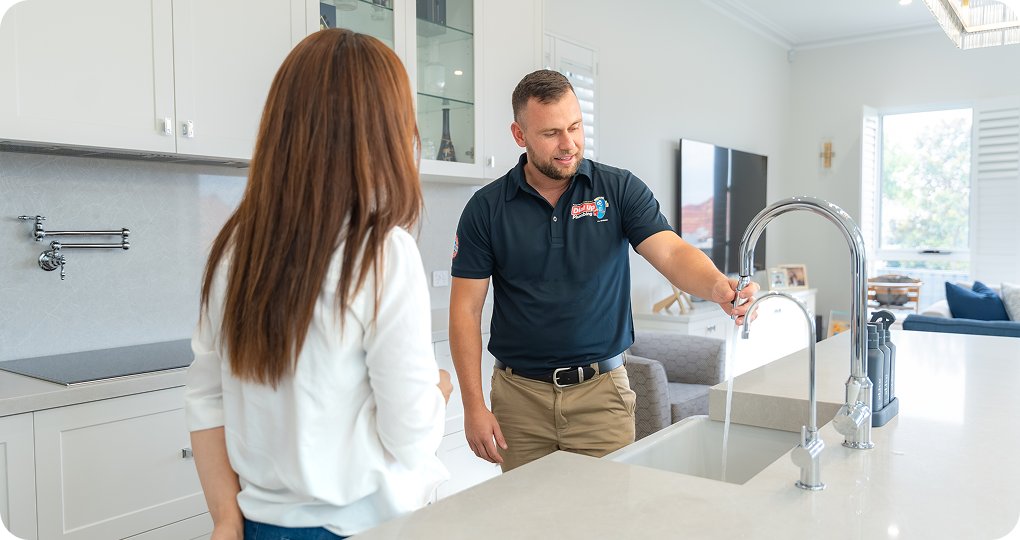


Electric storage is still the most common system in Sydney homes, and most of what decides your running costs happens before anyone picks up a spanner.
A lot of Sydney electric systems run on a controlled load tariff, sometimes called off-peak, where the tank only draws power overnight and coasts through the day on what it heated then. That’s what makes electric storage affordable to run. It also explains the most common call we get: if you’re running out of hot water in the evening but it’s back by morning, that’s usually a tariff or a sizing issue, not a fault. Smaller tanks from around 25 to 125 litres suit apartments and single-bathroom homes, while houses generally need 250 litres or more. A twin element tank can reheat during the day for faster recovery, and a single element tank is cheaper to buy and better suited to off-peak.
We repair, service and install electric hot water systems including Rheem, Vulcan and Thermann, for houses, apartments and strata properties right across Sydney. Most storage systems give 8 to 12 years, and having the anode and relief valve checked keeps yours at the top of that range rather than the bottom. Electric is the least efficient way to heat water by design, so if you’re replacing an older unit it’s worth asking whether a heat pump stacks up, especially with support available under the NSW Energy Savings Scheme; check the current position through NSW Government energy programs. If your home has a gas connection, gas hot water is another option worth comparing, and our hot water systems in Sydney page covers every system type. If a like-for-like electric swap is the right call for your place, that’s what we’ll quote.




“Chris came in on time and done very good job. We highly recommend him.”

“Same day friendly excellence! Charlie did the initial check and advised if it was an easy repair...

“I was impressed with the prompt service I received from this plumbing company. When I called for an urge...

“Outstanding plumbing service! Chris was incredibly professional, punctual, and thorough. He quickly...

“Excellent, prompt service!! Always on time, professional and extremely efficient for solving and fixing those...
Get in touch with Dial Up Plumbing by giving us a call, or submitting your details on the contact form. Time is of the essence – we’ll get back to you on the same day with availability, rough costs, and general hot water system guidance.
A hot water specialist will be dispatched to your property to assess the current situation, diagnose the problem, carry out the necessary repairs, or provide recommendations for a new/replacement system. We’ll provide all upfront pricing before any work begins.
Once a plumber has had a chance to assess the current system and problems, we’ll provide honest, unbiased advice on whether to repair or replace your current system. For systems over 8-10 years where the repairs required are significant, it may be more cost-effective to install a new system.
Once the job is finished, we will test temperature, water pressure, and the safety valve to ensure the unit is performing correctly. Where required, we can also produce a certificate of compliance.



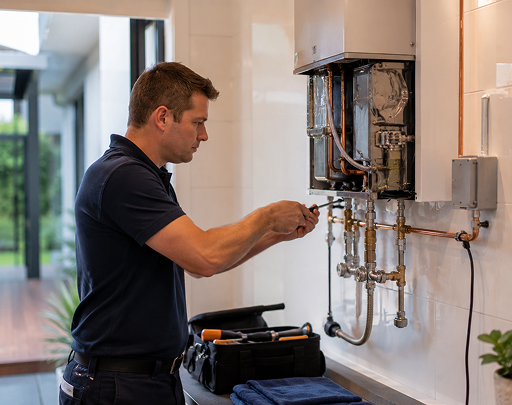
Our licensed plumbers and gas fitters can repair all types of systems – whether it’s gas storage, continuous flow, electric, solar, and heat pump. We’ll diagnose the problem, provide clear recommendations and pricing, and get the system fixed and running in no time.
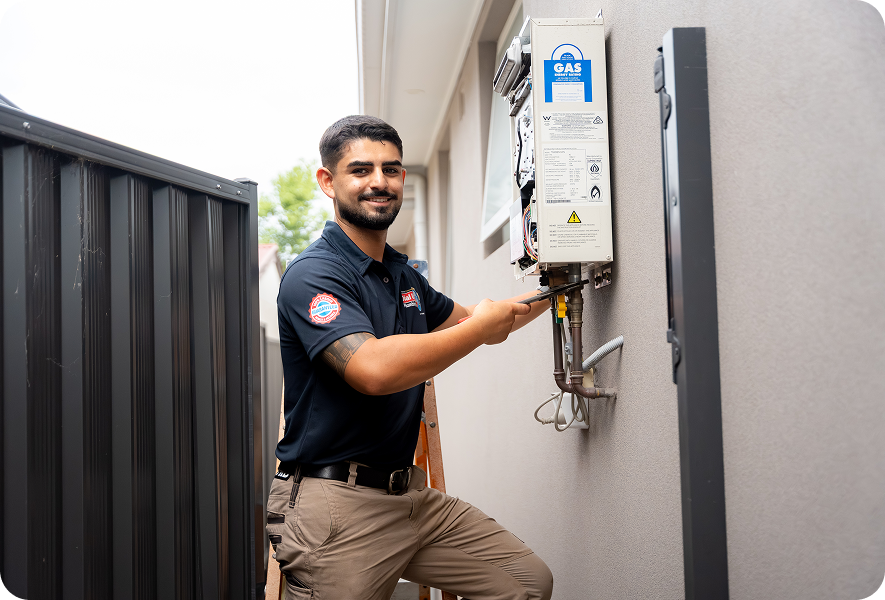
We can advise on, supply, and install a new hot water system for your home – whether it be a new build, a renovation, or a system upgrade. Dial Up can help to size the system correctly for your household needs and fit new pipework and connections to ensure seamless water heating.
Most storage water systems have a serviceable life of 8-12 years – continuous flow systems can be maintained to operate for longer. We generally recommend a check-up every 12 months, with a major service every 5 years to ensure safety valves and components are working efficiently.
Dial Up are licenced to work with gas connections and gas hot water heaters – we can repair, service, and install new gas instant and storage hot water systems across Sydney. Our plumbers regularly service issues with pilot light failures, fluctuating temperature, and gas supply issues. Read more about our gas hot water systems in Sydney.
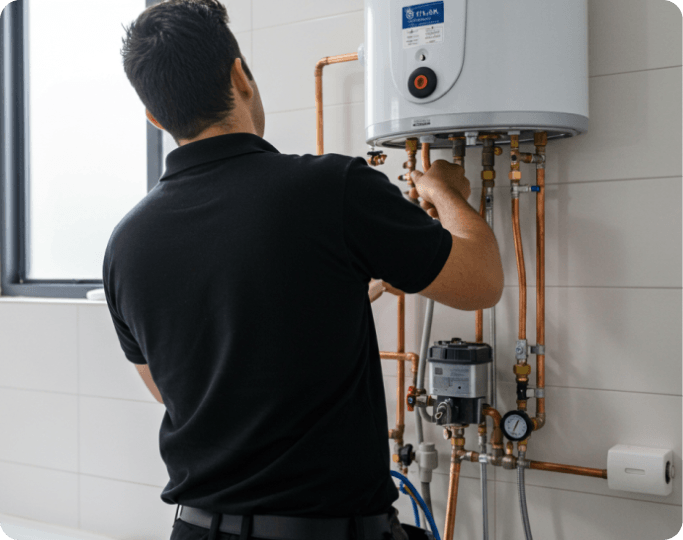
Electric systems are the most common across Sydney. We have experience in servicing and installing all types of electric hot water systems – from element replacements to thermostat faults, and full unit replacements across major brands like Rheem, Vulcan, and Thermann.

Solar and heat pump systems are becoming more popular as more NSW households move towards energy-efficient and solar powered devices under the NSW Energy Savings Scheme. We can set up, install, and maintain your solar hot water system to keep your hot water running seamlessly.
Our licensed plumbers and gas fitters can repair all types of systems – whether it’s gas storage, continuous flow, electric, solar, and heat pump. We’ll diagnose the problem, provide clear recommendations and pricing, and get the system fixed and running in no time.
We can advise on, supply, and install a new hot water system for your home – whether it be a new build, a renovation, or a system upgrade. Dial Up can help to size the system correctly for your household needs and fit new pipework and connections to ensure seamless water heating.
Most storage water systems have a serviceable life of 8-12 years – continuous flow systems can be maintained to operate for longer. We generally recommend a check-up every 12 months, with a major service every 5 years to ensure safety valves and components are working efficiently.
Dial Up are licenced to work with gas connections and gas hot water heaters – we can repair, service, and install new gas instant and storage hot water systems across Sydney. Our plumbers regularly service issues with pilot light failures, fluctuating temperature, and gas supply issues. Read more about our gas hot water systems in Sydney.
Electric systems are the most common across Sydney. We have experience in servicing and installing all types of electric hot water systems – from element replacements to thermostat faults, and full unit replacements across major brands like Rheem, Vulcan, and Thermann.
Solar and heat pump systems are becoming more popular as more NSW households move towards energy-efficient and solar powered devices under the NSW Energy Savings Scheme. We can set up, install, and maintain your solar hot water system to keep your hot water running seamlessly.





Most electric storage systems give 8 to 12 years. Where yours lands comes down to whether the sacrificial anode was ever checked, whether the relief valve was maintained, and how hard the household works the tank. Past 12 years, start planning a replacement rather than spending on repairs.
Usually, yes. Elements, thermostats, relief valves and tempering valves are all replaceable, and they account for most of the faults we attend. The exception is a corroded cylinder leaking from the tank body, which can’t be repaired by anyone. We’ll tell you which one you have before we quote.
Either the tank is undersized for the household, or the system is on a controlled load tariff that doesn’t give it enough heating time. Both are common and neither is a fault in the unit. A larger tank or a tariff change solves it, where a repair wouldn’t.
A heat pump uses considerably less energy for the same hot water and attracts support under the NSW Energy Savings Scheme, so for most houses with the space it’s the stronger long-term option. Electric still wins where there’s no room for an outdoor unit, in some apartments, or when you need hot water back today.
Often, yes, particularly a like-for-like swap where the capacity and location stay the same. It takes longer if the unit is being relocated, if the type is changing, or if electrical work is needed to suit the new system. We’ll tell you which one you’re looking at before we start.
As a guide, allow 50 to 70 litres per bedroom per day. Smaller tanks around 25 to 125 litres suit apartments and single-bathroom homes, while a four-bedroom house generally needs 250 litres or more. We size it on site, because how a household actually uses hot water matters more than the bedroom count.