No Hot Water? What to Check Before You Call a Plumber
November 24, 2026
By Ben Harb
2 min read
If you have no hot water this morning, there are four things worth checking before you phone anyone: whether the system still has power or gas, whether a switch has tripped at the board, whether the pilot light has gone out, and whether you are simply waiting on an off-peak tariff to reheat. Those four account for most of the no hot water calls we take.
The rest are real faults, and some of them need a licensed plumber the same day. This guide walks you through the safe checks in the order we would do them ourselves, then tells you plainly where to stop.
Start here: is it one tap or the whole house?
This one question splits the problem in half, and it takes thirty seconds.
Run the hot tap at the kitchen sink, then at the bathroom basin, then the shower. Give each one a good minute, because the water sitting in the pipe between the tank and the tap has to clear first.
No hot water anywhere. The problem is at the hot water system itself, or at the power or gas feeding it. Keep reading.
Hot water at some taps but not others. The system is probably fine. You are looking at a mixer cartridge, a blocked aerator, an isolation valve that has been nudged shut, or a tempering valve on that line. That is a tap repair, not a hot water job.
Warm but never properly hot, everywhere. The system is working but not getting to temperature. On an electric unit that usually means one of two elements has failed or the thermostat has drifted. On any system it can also be a tempering valve that has aged out and is mixing in too much cold.
Hot for a few minutes then cold. You have run the tank down. Either demand has grown, the tank is undersized for the household now, or the unit is not reheating between uses.
The four checks that solve most no hot water calls
These are safe for anyone to do. None of them involve opening the unit.
1. Confirm the system still has power or gas
Electric and heat pump systems usually have their own isolation switch, often a weatherproof one mounted on the wall beside the unit, sometimes a labelled switch in the meter box. It gets knocked off more often than you would think, especially in side passages where bins and bikes live.
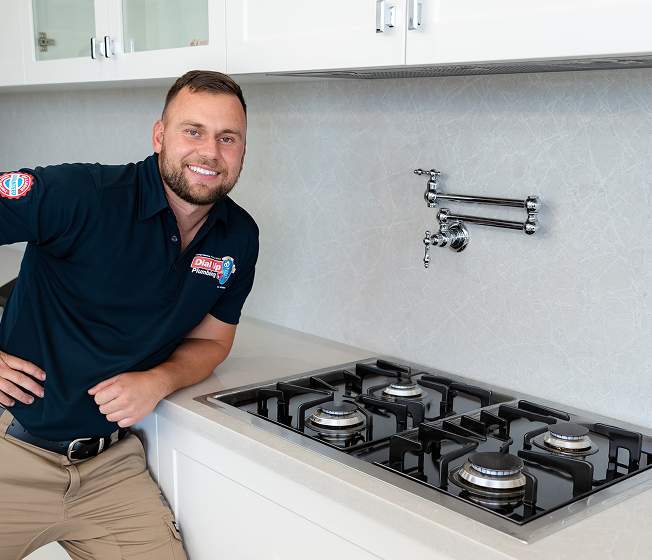
For gas, check that another gas appliance still works. If the cooktop lights, you have gas at the property and the fault is at the hot water unit. If nothing gas works, check whether the meter has been turned off or your account has lapsed.
2. Look for a tripped breaker or safety switch
Open the switchboard and look for a breaker sitting halfway or in the off position. Hot water circuits are usually labelled. Switch it firmly off, then back on.
Reset it once only. If it trips again, stop there and leave it off. A circuit that keeps tripping is telling you something is drawing current it should not be, and on a hot water system that is almost always a failed element with water where it should not be. Resetting it repeatedly does not fix anything and it is not safe.
3. Relight the pilot, on gas storage systems only
Older gas storage units have a standing pilot light behind a small access panel. If it has blown out, the relighting instructions are printed on the unit itself, and they are worth following exactly rather than from memory.
If it lights and stays lit, you are done. If it lights and goes out again within a minute or two, the thermocouple has failed and needs replacing. That is a licensed gas job.
Continuous flow and modern gas systems have electronic ignition and no pilot to relight. Skip to the next check.
4. Read the error code on a continuous flow controller
If you have a continuous flow unit, there is usually a wall controller in the kitchen or bathroom, and the unit itself has a display behind a small cover. A flashing number is a diagnostic code, and the manufacturer’s manual lists what each one means.
Write the code down before you call. It saves us diagnostic time on site, and sometimes it tells you the answer outright, such as a blocked water inlet filter that just needs cleaning.
Before you panic, are you on a controlled load tariff?
This is the one most guides miss, and in Sydney it matters.
A lot of electric storage systems here run on controlled load, also called off-peak. The power to the element is only switched on during set overnight hours, when electricity is cheapest. The tank heats through the night and the household draws on it all day.
If something ran the tank down late in the day, a long bath, a run of showers, visitors, there is genuinely no hot water until the tariff comes back on overnight. Nothing is broken. The system is doing exactly what it was wired to do.
Two ways to tell. Check your electricity bill for a separate usage line, often described as controlled load, off peak one or off peak two. Or look at the meter box for a second meter or a timer attached to the hot water circuit.
If that is your situation and it keeps happening, the answer is usually a bigger tank or a move to a continuous flow or heat pump system, not a repair.
What your symptom is pointing to
A rough guide to the most likely cause once you have done the checks above.
What you are seeing
Most likely cause
What to do
No hot water at any tap, electric system
Tripped breaker, failed element or thermostat
Reset once; if it trips again, call
No hot water at any tap, gas storage
Pilot out or failed thermocouple
Relight once following the panel instructions
Continuous flow runs cold, display shows a code
Ignition, water flow or gas supply fault
Note the code and call
Hot for five minutes then cold
Tank run down, or undersized for the household
Check the tariff before assuming a fault
Lukewarm everywhere, never hot
One failed element, drifted thermostat or ageing tempering valve
Call, this will not resolve itself
One tap only
Mixer cartridge, aerator or isolation valve
Tap repair, not a hot water job
Water pooling under or around the unit
Tank or fitting failure
Isolate the water and call now
Rusty or discoloured hot water
Anode spent, tank corroding internally
Call, replacement is likely close
Checks by system type
Electric storage
The most common fault by a wide margin is a failed heating element, and on twin element units you lose roughly half your hot water rather than all of it, which is why lukewarm is such a common complaint. Thermostats fail less often but do fail. Both are replaceable and neither needs the tank replaced, provided the tank itself is sound. We cover the system types and what each suits on our electric hot water systems page.
Gas storage
Pilot light and thermocouple first, then the gas control valve. A gas storage unit that will not hold a pilot after relighting needs a licensed gas fitter, not another attempt.
Continuous flow, also called instant gas
These need both gas and adequate water flow to fire. If a tap is barely open, the unit will not light, which is why a trickling bathroom tap sometimes runs cold while a fully open one runs hot. Blocked inlet filters are a genuinely common and cheap fix. Error codes tell you most of the rest. There is more detail on our gas hot water systems page.
Heat pump
Heat pumps struggle in genuinely cold snaps and most have an electric boost that kicks in. If the boost has failed, you notice it first on the coldest mornings. Fan noise, ice on the unit and a tripped circuit are the usual signs.
Solar with boost
A run of grey days with a failed booster looks exactly like a broken system. Check whether the booster switch has been turned off, which happens more than you would expect when someone is trying to save power and forgets.
Done the four checks and still cold? Switch the hot water system off at the isolation switch, leave the water isolated if anything is leaking, and dial up on 02 8999 6125. We are on call 24 hours a day, every day of the year, and we quote upfront before any work starts. See our full hot water systems Sydney service for what we cover.
Stop and call straight away if any of this is happening
Some of these are not plumbing problems yet, they are safety problems.
In case of emergency Call 000 now if you believe there is a major gas leak and the situation may be dangerous to life or property.
You can smell gas. NSW Government advises that you exit the building immediately, call 000 and ask for the NSW fire service, and do not use a lighter or a match to look for the leak. Jemena, the gas network for most of Sydney, also asks that leaks be reported on its 24 hour line, 131 909. We have set the full guidance out in what to do if you smell gas in the house.
Water is pouring out, not dripping. Turn off the cold water isolation valve at the unit, or the main at the meter if you cannot find it, then switch the system off. A full tank holds a lot of water and it will keep coming.
The breaker trips again the moment you reset it. Leave it off and leave it alone.
Water is coming out scalding, not just hot. That usually means the tempering valve has failed. It is a real burn risk for children and older people and it needs fixing that day.
The relief valve is discharging constantly. A trickle after heating is normal. A steady stream is a pressure problem and the valve is the only thing standing between you and a much bigger failure.
Any of those, and our emergency plumbers are available around the clock.
Why older Sydney homes lose hot water more often
Twenty five years of jobs across this city gives you a pattern, and it is not evenly spread.
In the terraces and semis through the Inner West, the hot water unit is usually squeezed into a narrow side passage or a back courtyard with no cover. Rain, leaf litter and the odd knock from a wheelie bin take a toll on the isolation switch, the external wiring and the base of the tank. Those units fail earlier than the same model sitting in a garage.
Closer to the coast, salt air shortens the life of exposed fittings and casings. On the northern beaches and through the eastern suburbs we see corroded relief valves and seized isolation valves years earlier than inland.
In strata blocks the hot water unit is often shared, or sits in a common property cupboard, and that changes who is responsible for fixing it. If you are in a unit and the whole building has gone cold, it is worth a call to strata before a plumber.
And across all of it, renovations. A bathroom gets added, the household grows, nobody resizes the hot water system, and a tank that was fine for two people never catches up with four.
Renting? No hot water is an urgent repair in NSW
If you rent, you do not have to negotiate this one. NSW law treats a breakdown of an essential service for hot water as an urgent repair, which means the landlord or agent has to arrange it promptly rather than at their convenience. The full list and the process sit on the NSW Government urgent repairs page.
Tell the agent in writing, even if you have already phoned, so there is a record and a time on it. Check your tenancy agreement, because many name an approved repairer you can contact directly. If nothing happens, the NSW page sets out what you can do next, including arranging the repair yourself in defined circumstances.
If you are the landlord or the agent and you need it handled the same day, we work with a number of property managers across Sydney and invoice directly.
Repair or replace
The honest answer depends on two things: the age of the unit and what has failed.
Under about eight years, repair is almost always the right call. Elements, thermostats, thermocouples and valves are all serviceable parts and the tank behind them has years left.
Past twelve years on a storage system, think hard before spending on it. Replacing an element in a tank that is corroding from the inside buys you months, not years, and you pay the call-out twice. Rusty water, weeping seams or a spent anode all point the same way.
Between those two, it comes down to the specific fault and what it costs to put right against what a new unit costs. We will tell you which side of the line you are on before you commit to anything. Our guide on how long hot water systems last in Sydney goes into the lifespan numbers by type, and if you are already thinking about replacement, we have written up what installation involves.
What happens when we arrive
So you know what you are paying for.
We confirm the fault rather than assume it, which means testing the element and thermostat on an electric unit, checking gas pressure and the thermocouple on a gas one, and reading the diagnostics on a continuous flow. We check the relief valve and the tempering valve while we are there, because both are common and both are cheaper to do in the same visit. We check the anode on a storage tank, since it tells you how much life is left.
Then you get the options and the price before anything is touched. Every job is backed by our lifetime workmanship guarantee and carried out to AS3500.
Frequently asked questions
The questions we get asked most often on hot water call-outs.
Why do I have no hot water all of a sudden?
A sudden loss, with everything working yesterday, usually points to something switching rather than something wearing out. The most common causes are a tripped breaker or isolation switch, a pilot light that has blown out, or a controlled load tariff that has not come back on yet. Faults that develop gradually, like a failing element, tend to show up as lukewarm water for a week or two first. If it went from fine to nothing overnight, check the switches before you assume the worst.
Is no hot water an emergency?
On its own, no. Uncomfortable and inconvenient, but it can usually wait until a normal appointment. It becomes an emergency when it comes with something else: a gas smell, water pouring out of the unit, a breaker that trips every time you reset it, scalding water at the tap, or a relief valve discharging in a steady stream. It is also urgent if there is a baby, an elderly person or someone unwell in the house. We run a 24 hour service either way, so you are not stuck choosing.
Can I relight the pilot light myself?
On an older gas storage system, yes, and the instructions are printed on the unit behind the access panel. Follow them exactly rather than from memory, because the waiting times between steps are there for a reason. Relight it once. If it will not stay lit, the thermocouple has almost certainly failed and that is a licensed gas job. Never try to relight anything if you can smell gas; leave the house and ring the gas network first.
Why is my hot water lukewarm but the cold is fine?
On an electric storage system with two elements, losing the upper or lower element leaves you with water that warms but never gets properly hot. It is one of the most common faults we see and it is a straightforward repair. The other likely culprit is the tempering valve, a safety device that blends cold into the hot line to stop scalding at the tap. When it ages it can drift and mix in too much cold. Both are fixable without replacing the system.
Will my home insurance cover a hot water system failure?
Generally not when the unit has simply worn out, because policies are built around sudden events rather than gradual deterioration. If the tank bursts and damages flooring, cabinetry or a ceiling below, the resulting water damage is often covered even when the unit itself is not. Policies differ and so do insurers, so it is worth reading your product disclosure statement and ringing them before you throw anything out. Photograph the failure before the old unit is removed.
How long will a hot water repair take?
Most common repairs are done in the one visit. An element or thermostat on an electric system, a thermocouple on a gas one, a tempering valve or a relief valve are all parts we carry. A full replacement usually takes a few hours, including draining the old unit and disposing of it. If a part has to be ordered for an unusual or older model, we will tell you that on the day rather than leave you wondering.
Should I turn the hot water system off if it is not working?
If it is leaking, yes, turn it off at the isolation switch or the gas valve and shut the cold water supply to the unit. If it is simply not heating and there is no water escaping, you can leave it on, although there is no harm in switching it off while you wait for us. Do not keep resetting a breaker that trips, and do not leave an electric system switched on if you have drained the tank, because running the element dry will destroy it.
The short version
Run three taps to see whether it is the whole house or just one. Check the isolation switch and the breaker. Relight the pilot once if you have one, or note the error code if you have a controller. Check whether you are on a controlled load tariff before you assume anything is broken. If you smell gas, see water pouring, or the breaker keeps tripping, stop and call.
Everything past that point is ours. Dial up on 02 8999 6125 or get in touch for a free quote, any hour of any day.
Share With:
Related Blog Posts
Blogs
November 24, 2026
No Hot Water? What to Check Before You Call a Plumber
If you have no hot water this morning, there are four things worth checking before you phone anyone: whether the system still has power or gas, whethe...
In case of emergency: Call 000 now if you believe there is a major gas leak and the situation may be dangerous to life or property. Natural gas has no...
Are Blocked Drains Covered by Home Insurance in NSW?
Home insurance in NSW usually pays for the water damage a blocked drain causes, and usually does not pay to clear the drain or repair the pipe behind ...
We are a family owned business which has been operating throughout Sydney for over 25+ years
ABN: 84133103349
LICENCE #: 218599c
Finn
Outstanding plumbing service! Chris was incredibly professional, punctual, and thorough. He quickly found the cause of our drainage issue using a camera inspection and explained everything clearly. The job was done neatly, efficiently, and with great attention to detail. Highly recommend Chris for anyone needing a reliable and skilled plumber.
Greg Whalan
Dial up plumbing were honest and upfront with the costs associated with the job. In addition, they also too made a video of the problem areas with ongoing comments while the job was being performed. I’d recommend these guys to anyone who have plumbing issues
Bianca
My family are very satisfied and impressed with this plumbing company. We live in the Liverpool area. Charlie visited us for a quote on a kitchen tap replacement and toilet repairs. He was very friendly and professional, took the time to explain the repairs and discuss prices. Chris then carried out the repairs the same day and he was equally as friendly and professional. We were so impressed with the work. We also had an emergency hot water system repair after hours the next week. We contacted Charlie who was so very helpful over the phone. Losing hot water can be stressful but he put us at ease. He attended within 30 mins and again explained the issue and cost. Once we agreed on the price he completed the repairs right away and we had hot water again. I have to say again how helpful Charlie was to us because losing hot water can be stressful especially the time of night everyone needs to shower. We are so grateful to finally find a plumbing company that is professional, honest, friendly and genuine on both occasions.
Fast response. Friendly service. No stress.
Claim your $50 before the end of November — spots are limited. Reach out now our friendly team will respond within 60 seconds.