


Gas hot water repairs, replacements & installation




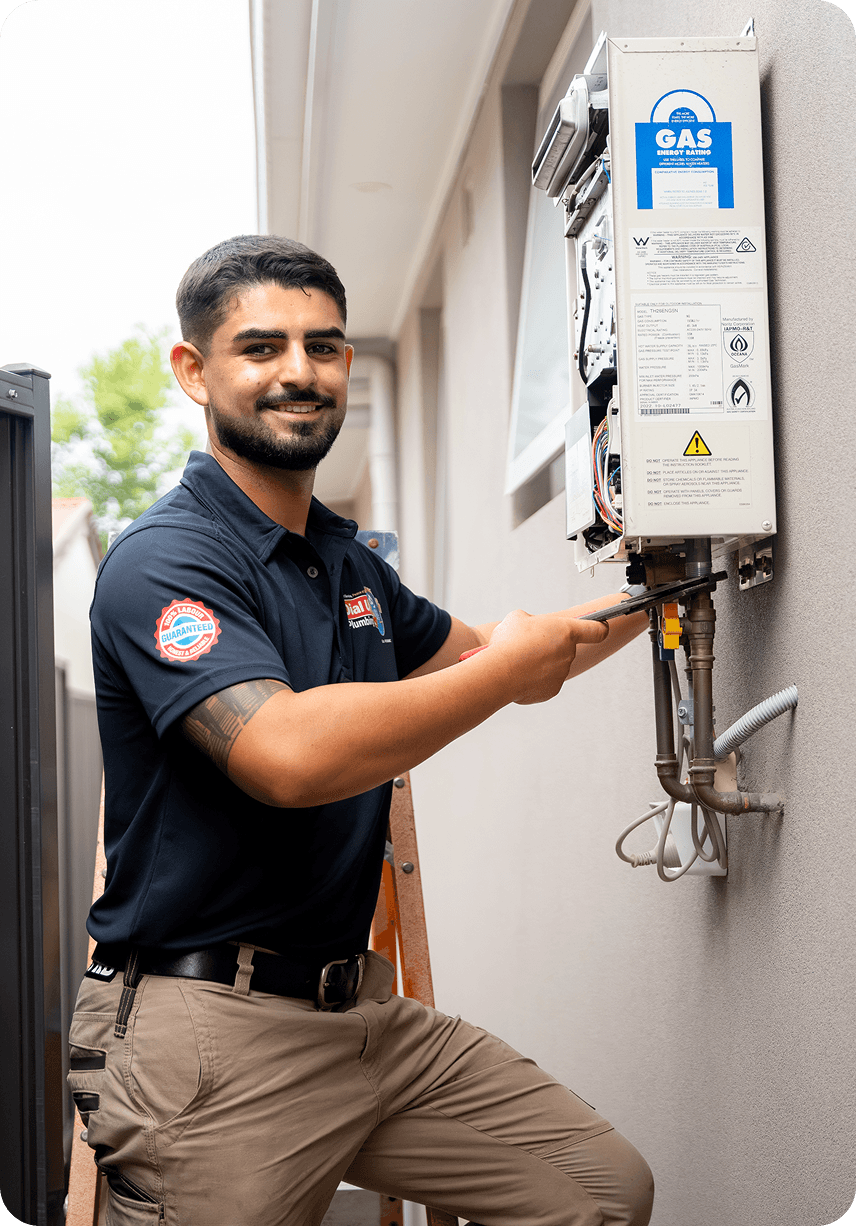
Gas hot water gone cold, a pilot light that won’t stay lit, or a tank finally leaking onto the laundry floor.
We repair, replace and install gas hot water systems right across Sydney, same day where we can, 24 hours a day, 365 days a year.
Gas work is not general plumbing. Every gas hot water job we do is carried out by licensed gasfitters to AS5601, and we issue a compliance certificate where one is required. That is the law, not an upsell.
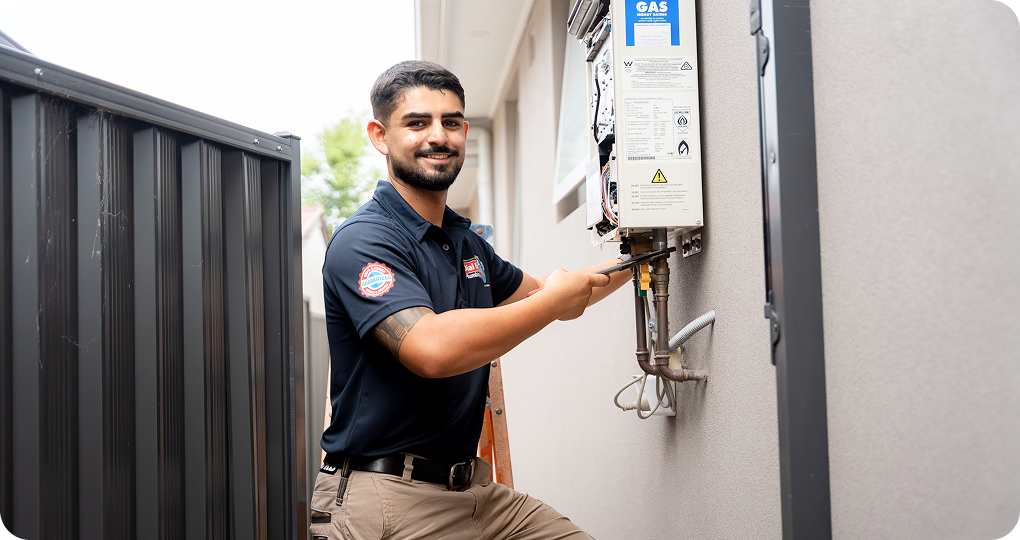
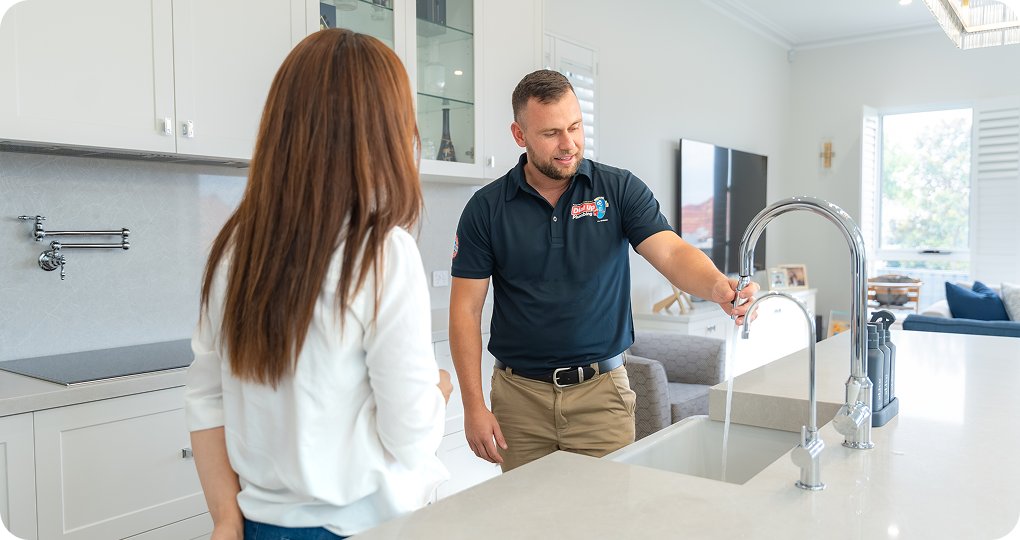


Both are good systems. They suit different houses, and most of the advice online only lists the upsides of continuous flow. Here is the honest comparison.
| Gas continuous flow | Gas storage | |
|---|---|---|
| How it works | Heats on demand, no tank | Heats and holds a tank of hot water |
| Typical lifespan | Usually 15 to 20 years | Usually 8 to 12 years |
| What ends it | Heat exchanger, valve or sensor faults | The steel cylinder corrodes through |
| Running hot water | Does not run out | Runs out, then needs recovery time |
| Space | Compact, wall mounted | Needs floor space for the tank |
| Gas supply needed | Higher demand, may need a larger line or meter | Lower demand, usually fine on existing supply |
| Watch out for | Minimum flow to fire up, and a brief cool patch between draw-offs | Standing heat loss, and a tank that will eventually rust |
Continuous flow is the better long-term buy for most homes, mainly because there is no tank sitting there corroding. Storage still wins where the gas supply will not carry a continuous flow unit, where several outlets run at once at low flow, or where you need hot water back today and a like-for-like swap is the fastest path.
This is the part that catches people out, and almost nobody puts it on a web page.
A continuous flow unit fires hard and fast when you open a hot tap, so it draws far more gas at that moment than a storage tank ever does. If your home is on an older or smaller gas line, or the meter was sized years ago for a cooktop and a storage heater, the supply may not carry the new unit properly. You get a system that underperforms, or a quote that climbs once someone finally checks.
We check the meter, the line size and the run length before we quote, not after. If an upgrade is needed, you will hear it from us up front with the cost attached, rather than discovering it on installation day. Sometimes that check is the reason we recommend staying with gas storage, and we will say so.
Gas hot water fails in a handful of predictable ways. Most of them are repairs.
| What you are seeing | Usual cause | Repair or replace |
|---|---|---|
| Pilot light will not stay lit | Thermocouple, or a dirty pilot assembly | Repair |
| No hot water, unit will not fire | Gas valve, igniter or no gas supply | Repair |
| Fault code on a continuous flow unit | Sensor, valve or flow switch | Repair |
| Water runs hot then cold | Flow rate too low, or a failing valve | Repair |
| Soot or yellow flame at the burner | Incomplete combustion, needs attention now | Repair, urgently |
| Water pooling under a storage tank | The cylinder has corroded through | Replace |
| Rusty hot water that does not clear | Corrosion inside the tank | Usually replace |
The rule is the same as every other hot water system. Everything attached to the outside of the unit can be replaced. The steel cylinder in a storage tank cannot. Once a system is past 8 to 10 years and facing a significant repair, a replacement is usually the better spend.
One exception worth knowing: a gas continuous flow unit is often still worth repairing well into its teens, because the failures are parts rather than structure.
This one does not wait, and it is worth knowing before you need it.
Other signs worth taking seriously: a hissing or whistling near the unit or the line, bubbling in wet ground near a gas pipe, dying plants along the run, or condensation forming on the pipework. Our licensed gas fitting team handles leak detection and repair across Sydney, and we are available for it at any hour.
Gas appliance work in NSW must be carried out by a licensed gasfitter. That is not optional, and it is worth checking the licence of anyone you let near a gas appliance; NSW Fair Trading lets you verify a trade licence in a minute. Ours is 218599c, and our gasfitters are fully insured with public liability and business cover.
Call or enquire online and we will give you a same-day response and, where we can, an idea of cost over the phone. On site we assess the unit, the gas supply and the flue before anything is quoted, and you get the price before any work starts.
When the job is done we pressure test the gas work, check every joint, fire the unit up and run the hot taps before we pack up. Where a compliance certificate is required, we issue it. Plumbing work is completed to AS3500 and gas work to AS5601, and every job is backed by our lifetime workmanship guarantee.
We install and service the brands you will actually find in Sydney homes, including Rinnai, Rheem, Bosch, Dux and Vulcan. If yours is something else, read the model off the data plate and call it through; that tells us the age and whether parts are still available before anyone leaves.
We cover greater Sydney, from the Inner West and Eastern Suburbs to the North Shore, Northern Beaches, Hills District, Sutherland Shire, St George, Canterbury-Bankstown, City of Ryde, Hornsby and Western Sydney. Gas hot water tends to fail on the coldest morning of the year, which is exactly when our 24/7 team is worth having.
Cold shower this morning, a pilot that will not hold, or a tank weeping at the base? We will get a licensed gasfitter out, tell you honestly whether it is a repair or a replacement, and give you the price before we start.
Call 02 8999 6125 or request a free quote and we will sort it out.
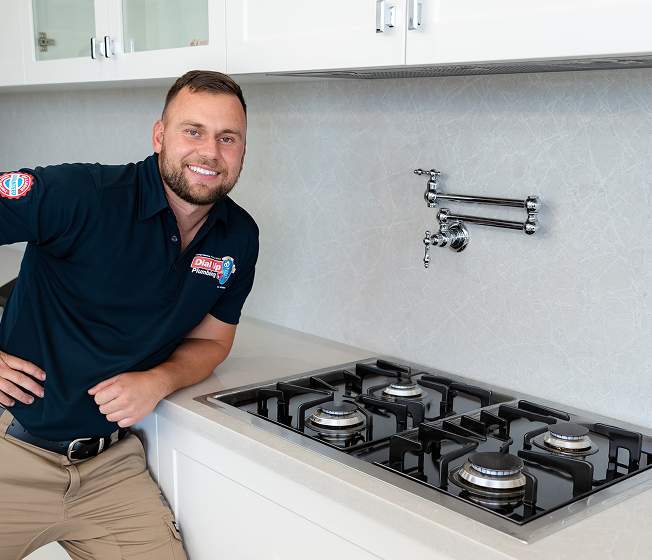




“Chris came in on time and done very good job. We highly recommend him.”

“Same day friendly excellence! Charlie did the initial check and advised if it was an easy repair...

“I was impressed with the prompt service I received from this plumbing company. When I called for an urge...

“Outstanding plumbing service! Chris was incredibly professional, punctual, and thorough. He quickly...

“Excellent, prompt service!! Always on time, professional and extremely efficient for solving and fixing those...
Get in touch with Dial Up Plumbing by giving us a call, or submitting your details on the contact form. Time is of the essence – we’ll get back to you on the same day with availability, rough costs, and general hot water system guidance.
A hot water specialist will be dispatched to your property to assess the current situation, diagnose the problem, carry out the necessary repairs, or provide recommendations for a new/replacement system. We’ll provide all upfront pricing before any work begins.
Once a plumber has had a chance to assess the current system and problems, we’ll provide honest, unbiased advice on whether to repair or replace your current system. For systems over 8-10 years where the repairs required are significant, it may be more cost-effective to install a new system.
Once the job is finished, we will test temperature, water pressure, and the safety valve to ensure the unit is performing correctly. Where required, we can also produce a certificate of compliance.




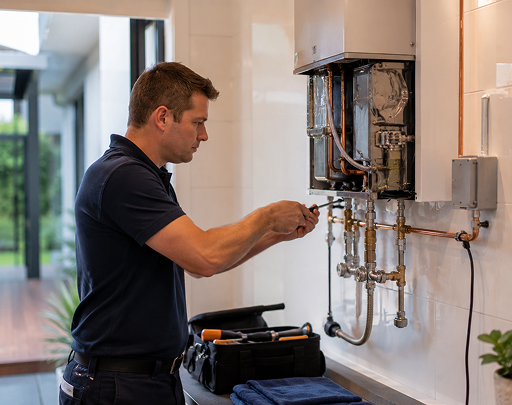
Pilot lights, thermocouples, gas valves, igniters, thermostats, relief valves and fault codes on continuous flow units. Most gas hot water faults are repairs, and we carry the common parts so one visit usually sorts it.
Like-for-like swaps in the same spot, or a change of system if the old one was never right for the house. We take the old unit away and make good.

New builds and renovations, storage to continuous flow conversions, and changeovers from electric hot water to gas where the property has the supply for it.
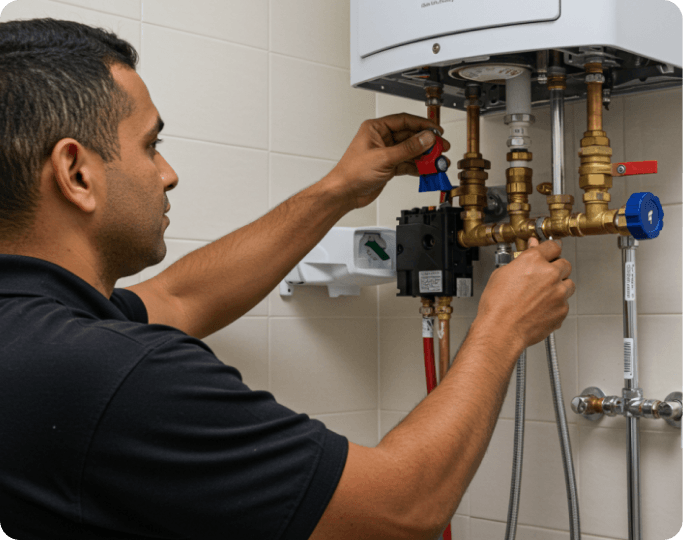
An annual service on a gas unit checks the burner, the gas pressure, the flue and the safety devices. It is the cheapest thing you will ever do for a hot water system. The same cadence applies across every system type on our hot water systems in Sydney page.
Pilot lights, thermocouples, gas valves, igniters, thermostats, relief valves and fault codes on continuous flow units. Most gas hot water faults are repairs, and we carry the common parts so one visit usually sorts it.
Like-for-like swaps in the same spot, or a change of system if the old one was never right for the house. We take the old unit away and make good.
New builds and renovations, storage to continuous flow conversions, and changeovers from electric hot water to gas where the property has the supply for it.
An annual service on a gas unit checks the burner, the gas pressure, the flue and the safety devices. It is the cheapest thing you will ever do for a hot water system. The same cadence applies across every system type on our hot water systems in Sydney page.









A gas storage tank usually gives 8 to 12 years, and a gas continuous flow unit often runs 15 to 20 because there is no cylinder to corrode. Servicing decides where yours lands. An annual check of the burner, gas pressure and safety devices keeps a system near the top of its range.
For most homes, yes, mainly because the hot water does not run out and there is no tank slowly rusting. Storage still wins where the gas supply will not carry a continuous flow unit, where several low-flow outlets run at once, or where you need hot water restored today. We will tell you which applies to your place.
Usually, if the property has a gas connection with enough capacity and there is a suitable spot with proper flueing. It is more involved than a like-for-like swap of an electric hot water system because it needs new gas pipework and a licensed gasfitter. We check the meter and line size first so the quote reflects the real job.
Nine times out of ten it is the thermocouple, the small sensor that tells the gas valve the pilot is lit. When it weakens, the valve shuts the gas off as a safety measure. It is an inexpensive part and a straightforward repair, so do not let anyone sell you a whole system on the back of it.
Yes. Any gas appliance installation in NSW must be done by a licensed gasfitter, including hot water systems, and a compliance certificate is issued for the work. Beyond the legal side, bad gas work is dangerous, so it is not a job for a handyman or a general plumber without the gas licence.
Often, yes, particularly a like-for-like swap where the type, size and location stay the same. It takes longer if you are converting from storage to continuous flow, relocating the unit, or if the gas line or meter needs upgrading to suit. We will tell you which one you are looking at before we start.
Avoid switches and flames, open doors and windows if it is safe, turn the gas off at the meter, and leave the property. Call 000 and ask for NSW Fire and Rescue, then call us. Do not wait to see if the smell goes away, and do not go looking for the leak yourself.