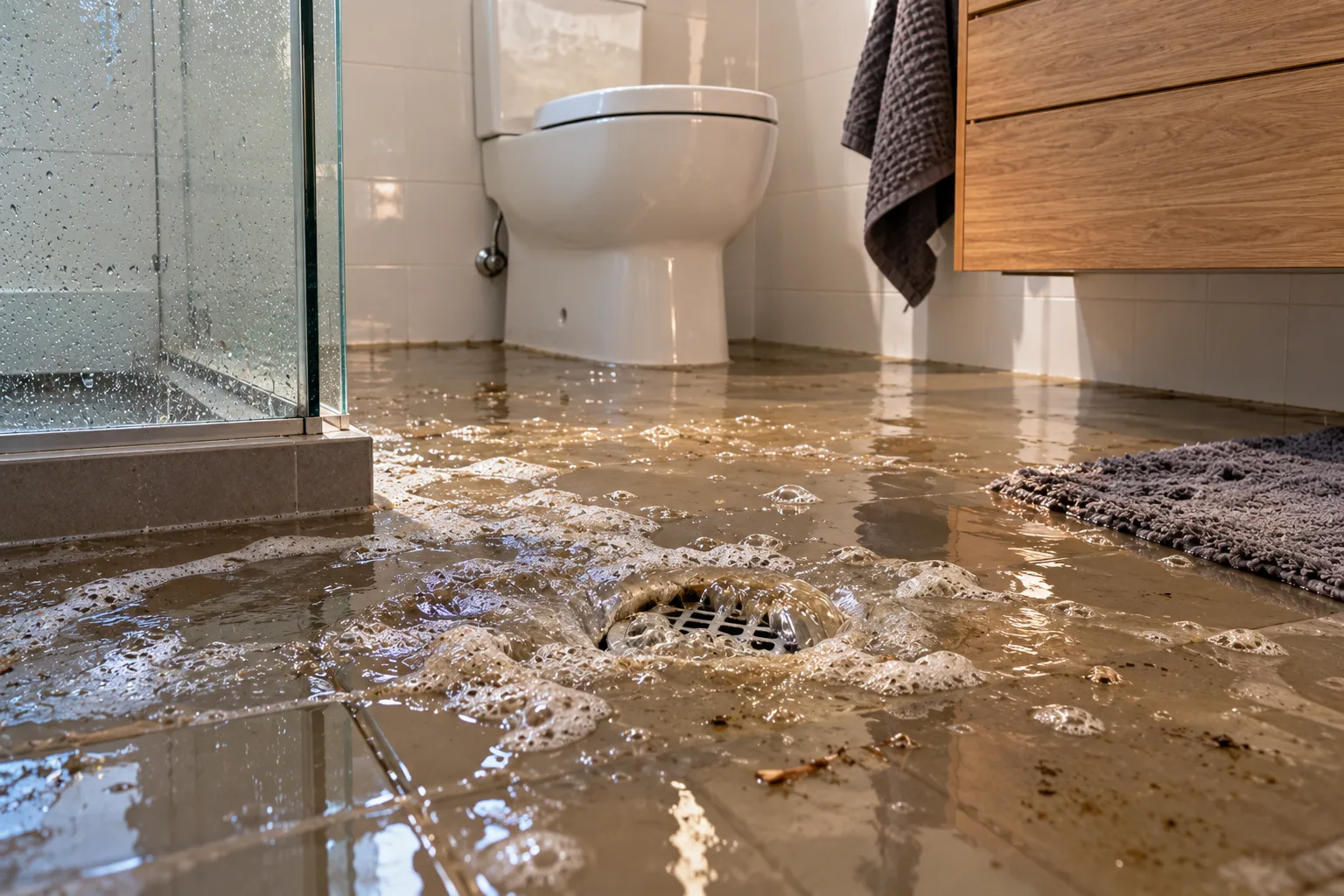
Are Blocked Drains Covered by Home Insurance in NSW?
November 3, 2026
By Ben Harb
2 min read
Home insurance in NSW usually pays for the water damage a blocked drain causes, and usually does not pay to clear the drain or repair the pipe behind it. That split is what catches most people out.
Whether you get paid at all turns on a single question: was the cause a sudden event, or something that built up over years? Below is what policies typically cover, where the Sydney Water boundary actually sits, and what your plumber needs to put in writing before you lodge anything.
This is general information, not insurance advice. Every policy is worded differently, so your product disclosure statement and your insurer have the final say on your claim.
What Home Insurance Usually Covers, and What It Usually Excludes
Most home policies deal with this under escape of liquid. The wording varies between insurers, but the pattern across the market is consistent.
What has happened
Typical position
Water damage to floors, walls and contents from a sudden overflow
Usually covered
Clearing the blockage itself
Usually not covered
Repairing or replacing the pipe that failed
Usually not, unless you hold optional pipe cover
A pipe that cracks or collapses suddenly
Sometimes covered as an event
Tree roots that have grown into the line over years
Usually not covered
Blockage from wet wipes, cooking fat or hair
Usually not covered
Sewage overflow inside the house
Damage often covered, the drain repair usually not
Leak detection and the cost of getting access
Sometimes covered, often capped
Temporary accommodation if the home is unliveable
Often covered
Damage that built up slowly before anyone noticed
Usually not covered
Read that table as a starting point for the conversation with your insurer, not as your policy. Two houses on the same street with the same blockage can get different answers because they are with different insurers.
The Line Every Claim Turns On: Sudden or Gradual
As a general rule, home policies are built around sudden events rather than long-running conditions. How that plays out in your case depends on your policy wording and the circumstances, and insurers do differ. Most of a blocked drain claim still turns on that one distinction.
A tree root that fractures a sound pipe and floods a bathroom in an afternoon looks like an event. The same tree root growing quietly through a cracked joint for six years, until the line finally gives up, looks like a condition that was always going to end this way. The water on the floor can be identical. The claim outcome is not.
What decides it is physical evidence, and that evidence is in the pipe. Corrosion patterns, the extent of root growth, water staining on surrounding materials, whether the damage spread from one point or crept across a floor over months. An assessor reads those the way we do.
This is also why repeat blockages matter so much, and we come back to that further down.
Whose Pipe Is It? Sydney Water’s Boundary, Not the Council’s
Plenty of advice online tells NSW homeowners that pipes past the property line are the council’s problem. In Sydney that is the wrong authority and often the wrong answer.
Councils do not run the sewer network here. Sydney Water does, and the split is between their mains and your private line. As a general rule the pipework serving your property is yours to maintain and repair, right through to where it connects to their main, and that connection point is not always at your fence. Sydney Water maintains the mains themselves. You can see how a typical connection is arranged on Sydney Water’s guide to typical system connections.
Exceptions do apply. Some properties sit on shared or joint private lines, some have arrangements that predate the current rules, and a few have pipework that crosses neighbouring land. If you are not certain which side of the line your fault sits on, confirm it before you lodge anything, because it changes who is responsible for the repair.
The practical consequence is the part people miss. A blockage in a private line that happens to run beyond your boundary can still be yours, and an insurer will treat it as your pipe. Knowing which side of that line the fault sits on changes who pays, and it is one of the first things we establish with the camera.
If you are in a terrace or semi, there is a second complication. Older rows across the Inner West and the inner south often share a private line between several properties, which means the cost and the claim can involve your neighbours.
What to Do First When a Blocked Drain Floods the House
Two safety points before anything else. Water from a blocked sewer or an overflowing drain carries contamination, so keep children and pets well clear of it, wear gloves and closed footwear if you have to walk through it, and wash thoroughly afterwards. And if water has reached powerpoints, appliances, extension leads or anything else electrical, do not touch it. Switch the power off at the switchboard if you can reach it safely and stay dry doing so, otherwise call an electrician before you go near it.
Once it is safe, the first hour decides how straightforward the claim is. In order:
Stop using water. Every flush and every load of washing adds to the damage and to the argument that you made it worse.
Photograph and film everything before you clean up. Wide shots of each room, close-ups of the water line on walls and skirting, and the contents that got wet. Nobody has ever regretted taking too many photos here.
Call a licensed plumber and ask for a written report, not just an invoice. What you need from the visit is evidence, and that is covered in the next section.
Call your insurer before you authorise any repair beyond making the property safe. Making safe is expected of you. Rebuilding before they have seen it is not.
Keep every receipt, and note the date, time and name for every call you make. Emergency attendance is sometimes reimbursable, but only with paperwork.
If the claim is knocked back, ask for the reasons in writing, then take it to the insurer’s internal dispute process and, if needed, the Australian Financial Complaints Authority. Denials do get overturned, usually on evidence rather than argument.
What Your Plumber’s Report Actually Needs to Say
Every article on this topic tells you to get a plumber’s report. Almost none of them tell you what makes a report useful to an insurer, which is why so many of them are not.
A report that carries weight sets out:
The date and time of attendance, and what the property looked like on arrival.
What was found, where, and how far along the line, including which side of the Sydney Water boundary it sits on.
The cause in plain terms: roots, a collapse, a fracture, foreign objects, fat build-up.
Whether the physical evidence points to a sudden failure or long-term deterioration, stated directly rather than left for the assessor to infer.
The pipe material, its approximate age and its condition. Earthenware, cast iron, PVC and the state they are in all carry meaning.
CCTV footage and stills of the fault itself, not just a description of it.
What was done to make the property safe, and what repair is still outstanding.
This is where the camera earns its keep. On every blocked drain job we hand over a full CCTV report with footage and photos before we leave, and we check back the next day to confirm everything is draining as it should. That report is written to be read by someone who was not there, which is exactly what your insurer needs. You can see how we work through a blocked drain in Sydney from the first call to the final flush test.
When It Is Not Worth Claiming At All
Here is the part most plumbers will not put in writing. A lot of blocked drains should never go near an insurance claim.
If the drain blocked, we cleared it, and nothing else in the house was damaged, there is usually nothing to claim. The clearing itself is the part policies tend to exclude, and the excess on most home policies is more than a straightforward drain clear costs in the first place. You would be lodging a claim that gets declined, on a job you were always going to pay for.
Claims history also follows you. Insurers vary in how they treat a declined claim and it will not always affect your premium, but it does generally stay on your record and some insurers take it into account at renewal. Worth asking yours how they handle it before you lodge something the policy was never going to cover.
Claim when there is real damage to the building or your contents. Soaked flooring, damaged cabinetry, ruined belongings, sewage inside the house, a home you cannot live in. That is what the cover is for.
Tree Roots, Old Pipes and the Repeat Blockage Trap
Sydney’s drainage and Sydney’s trees are a bad combination, and it drives most of the contested claims we see.
Fig, jacaranda and camphor laurel roots find the smallest fault in a joint and work in from there. The housing stock does not help. Across the Inner West and the older inner suburbs, plenty of terraces and semis are still on original earthenware or cast iron, laid long before anyone was thinking about the tree that is now three metres from the line.
Roots that grew in over years are gradual, and gradual is excluded. A sound pipe that a root fractures outright can be an event. The difference is visible on camera, which is why the footage matters more than the description.
Then there is the trap. If a drain has blocked three times and been cleared three times without anyone repairing the pipe, you have created a documented history of a known, unrepaired problem. Insurers use exactly that to decline. Clearing is not fixing; it buys months, and each clear strengthens the insurer’s position rather than yours.
The way out of that cycle is to repair the line rather than keep clearing it. We use ROOTX and VAPOROOTER to deal with root intrusion safely, and where the pipe itself has failed, pipe relining puts a new jointless pipe inside the old one without digging up the yard. Relined pipes carry a 50 year life expectancy and our 100% lifetime labour guarantee on workmanship, which ends the repeat blockage argument permanently.
Strata, Landlords and Tenants
Who claims depends on who owns the pipe and who owns the damaged thing.
In strata, the owners corporation’s building policy generally covers common property, which is where most shared drainage sits. Your own contents policy covers your belongings. If the blockage is in a line serving only your lot, it is more likely to fall to you, and the strata plan is what settles it. We are happy to talk directly to a strata manager where that helps.
If you rent the property out, your landlord policy typically covers the building and sometimes lost rent while it is unliveable. A tenant’s contents policy covers their possessions, not the drain. Tenants should report a blocked drain to the agent in writing straight away, because the date of that report often matters later.
Frequently Asked Questions
There is no such thing as a silly question when water is coming up through the floor. If yours is not here, dial up and we will talk it through.
Are blocked drains covered by insurance in NSW?
The damage a blocked drain causes is usually covered when the cause was sudden and accidental. Clearing the blockage and repairing the pipe usually are not, unless you hold optional pipe or underground services cover. The deciding factor is almost always whether the cause was an event or a long-running condition.
Will insurance pay to repair the pipe itself?
Standard home policies generally exclude the failed pipe, treating it as maintenance. Some insurers sell optional cover for underground pipes and services as an add-on, and that is the cover that pays for the repair rather than just the mess. It is worth checking whether you already hold it before you assume you do not.
Are tree roots in the drain covered?
Usually not, because root intrusion is gradual by nature and takes years. The exception is where roots cause a sudden fracture or collapse in a pipe that was otherwise sound, which some policies treat as an event. CCTV footage of the fault is what separates the two, so get it before you lodge.
Whose responsibility is the pipe, mine or Sydney Water’s?
Sydney Water maintains the mains. The private line serving your property is generally yours, through to the point where it connects to their main, and that point is not always at your boundary fence. Councils are not the responsible authority for sewer here, despite what a lot of online advice says. Check your own situation with Sydney Water.
What happens if my claim is denied?
Ask for the decision and the reasons in writing, then use the insurer’s internal dispute resolution process. If that does not resolve it, the Australian Financial Complaints Authority reviews home insurance disputes free of charge. Denials are most often overturned on new evidence, such as CCTV footage showing the fault was sudden rather than longstanding.
Does it matter that the drain has blocked before?
Yes, and it is one of the most common reasons claims fail. A line that has been cleared repeatedly without ever being repaired reads as a known, unaddressed problem, which lands squarely in the maintenance exclusion. Repairing the pipe properly after the first or second blockage protects the asset and your position with the insurer.
I rent the property out. Who lodges the claim?
The building and any lost rent sit with the landlord policy, so that claim is yours. Your tenant’s contents insurance covers their own belongings and they lodge that separately. Make sure the tenant’s written report of the blockage is on file, because the timeline between first report and attendance can become relevant.
Can I add blocked drain cover to my policy?
Many insurers offer optional cover for underground pipes, services or accidental damage that extends to drainage. It is worth asking what it includes, what it caps out at, and whether it excludes pre-existing faults, because cover bought after a known problem rarely helps. Disclose anything you already know about when you take it out.
The One Thing to Do This Week
If your drain has blocked even once, get the line looked at with a camera and keep the footage. A dated CCTV record of the pipe in good condition is the single most useful thing you can hold if you ever need to argue that a later failure was sudden. If the pipe is already damaged, you have found it before it flooded something.
Dealing with a blocked drain now, or putting a claim together? Dial up on 02 8999 6125 or request a free quote and we will get a plumber out, find the cause, and give you a report your insurer can actually use.
Share With:
Related Blog Posts
Blogs
November 3, 2026
Are Blocked Drains Covered by Home Insurance in NSW?
Home insurance in NSW usually pays for the water damage a blocked drain causes, and usually does not pay to clear the drain or repair the pipe behind ...
Most hot water systems in Sydney last between 8 and 20 years. An electric or gas storage tank will usually give you 8 to 12 years, a heat pump 10 to 1...
The average hourly rate for plumbers in Sydney typically ranges from $100 to $200, depending on the complexity of the job, the time of day, and the pl...
Are Blocked Drains Covered by Home Insurance in NSW?
Home insurance in NSW usually pays for the water damage a blocked drain causes, and usually does not pay to clear the drain or repair the pipe behind ...
Most hot water systems in Sydney last between 8 and 20 years. An electric or gas storage tank will usually give you 8 to 12 years, a heat pump 10 to 1...
The average hourly rate for plumbers in Sydney typically ranges from $100 to $200, depending on the complexity of the job, the time of day, and the pl...
We are a family owned business which has been operating throughout Sydney for over 25+ years
ABN: 84133103349
LICENCE #: 218599c
Finn
Outstanding plumbing service! Chris was incredibly professional, punctual, and thorough. He quickly found the cause of our drainage issue using a camera inspection and explained everything clearly. The job was done neatly, efficiently, and with great attention to detail. Highly recommend Chris for anyone needing a reliable and skilled plumber.
Greg Whalan
Dial up plumbing were honest and upfront with the costs associated with the job. In addition, they also too made a video of the problem areas with ongoing comments while the job was being performed. I’d recommend these guys to anyone who have plumbing issues
Bianca
My family are very satisfied and impressed with this plumbing company. We live in the Liverpool area. Charlie visited us for a quote on a kitchen tap replacement and toilet repairs. He was very friendly and professional, took the time to explain the repairs and discuss prices. Chris then carried out the repairs the same day and he was equally as friendly and professional. We were so impressed with the work. We also had an emergency hot water system repair after hours the next week. We contacted Charlie who was so very helpful over the phone. Losing hot water can be stressful but he put us at ease. He attended within 30 mins and again explained the issue and cost. Once we agreed on the price he completed the repairs right away and we had hot water again. I have to say again how helpful Charlie was to us because losing hot water can be stressful especially the time of night everyone needs to shower. We are so grateful to finally find a plumbing company that is professional, honest, friendly and genuine on both occasions.
Fast response. Friendly service. No stress.
Claim your $50 before the end of November — spots are limited. Reach out now our friendly team will respond within 60 seconds.